
My first trip to the Northern Hemisphere was in winter. We finished school on a stinking hot Queensland Friday and flew half way across the world for five months in the UK and Europe. I was 12 and had just finished primary school. No school for five months was very appealing, as was potentially seeing snow for the first time.
Weather-wise, us Queensland kids had no idea what we were in for. I can’t remember having too many clothes available to pack – not many would have fitted from the previous winter – but I do remember going shopping soon after arriving for the essentials: a duffle coat, Wellington boots and dress boots. Sadly, the Wellington boots weren’t needed all that often – we only saw one minor snow fall the whole time we were there. The dress boots and duffle coat? They got a workout whenever we ventured outdoors.
Indoors it was a balmy 24-plus degrees on account of the central heating so you never went to bed shivering like I do in our Queenslander home in winter. Seven years later I returned to the UK to stay with my English grandparents again. I also spent weeks in Europe, mostly in Germany with a host family. Fun fact: I studied German at university and that six weeks speaking the language definitely meant the difference between me passing and failing in my final year of uni.
My trip started off mildly enough in the UK, weather-wise, but by the time I landed in Germany, things had chilled to a numbing -18 degrees. It was so cold, my body ached. My English step-mum said I wouldn’t need thermals – she’d never worn any in her life in Europe – so I didn’t pack any. Let’s just say I was far from equipped to deal with the elements, inside and out. My host family had an amazing house but they didn’t have the same sauna-like approach to heating, as my UK family.
Lesson learned. I will never travel to the Northern Hemisphere in autumn or winter without thermals. Thermals have come a long way too. The technology in the fabrics used means that you can not only stay warm without the bulk but packing these layers doesn’t take up too much room in your suitcase. UNIQLO’s Heattech range of thermal is incredible – there are three levels of thermals available to buy, depending on how cold the destination. The Ultra Light Down and Down coats available at UNIQLO are also ideal because you get warmth without the weight. You’ll find a number of different levels of warmth offered, so choose what’s right for your destination and time of travel. For non-extreme winter travelling, the Ultra Light Down coats and jackets work well because they roll up into small bags.
Aldi also does a winter thermal range at great prices. This sale usually happens late May or early June in Australia, so if you’re in the market, keep your eye out. The stock usually goes super quickly.
While a winter trip might mean packing bulkier, warmer pieces, the plus side is you don’t sweat as much so don’t need to do laundry as often. Tops worn close to your body might need washing after one wear but things like jeans don’t. You can also reduce the number of shoes you take because your feet will need to be covered and warm. In autumn, you will get away with sneakers but in the height of winter, it will be boots you need (with thermal socks underneath). Scarves, gloves and hats are not just fun layering pieces – they are essential for keeping you warm.
Most places are centrally heated. Once inside you need to be able to take off your layers to suit. This means making sure your outfit’s base layer looks okay on its own. If push comes to shove and it’s boiling inside, you want to feel confident and comfortable in that base layer.
My number one packing tip for any destination is to track the temperatures at your planned destination. I do this in advance by Googling the average temperatures for that time of year. As it gets closer to the time I need to pack, I follow the actual temperatures more closely, via my phone’s weather app. I compare those projected temperatures with how those same temps would feel at home.
If you’re travelling at the beginning of official autumn and to southern countries in Europe, then you might want to include pieces similar to those featured in this what to pack post. We had a fabulous trip many years ago to Greece in September and it was still hot, with no signs of autumn. Towards the end of the winter months, you may get some milder days but cold snaps are still very much possible through spring.
Using the capsule below as a starting point, add or subtract layers and pieces depending on which part of autumn/winter you’ll be travelling in.
My number two tip for creating a travel capsule wardrobe is to keep the colour palette super tight. You want everything that you pack to work back with each other – and to have dress-up/dress-down versatility. How many pieces you pack for your travel capsule will depend on how long you are travelling for and how much access you have to washing facilities while travelling. Increase the number of garments to suit your individual holiday needs.
Key extras: thermals, a raincoat, umbrella and sunglasses. Accessories-wise, a statement pair of earrings and/or a statement necklace can go a long way to transform your daywear into evening. If you know you’ll be going out to shows or high-end restaurants, then also pack a season-appropriate little black dress or “nice top” to extend your day wardrobe into night.
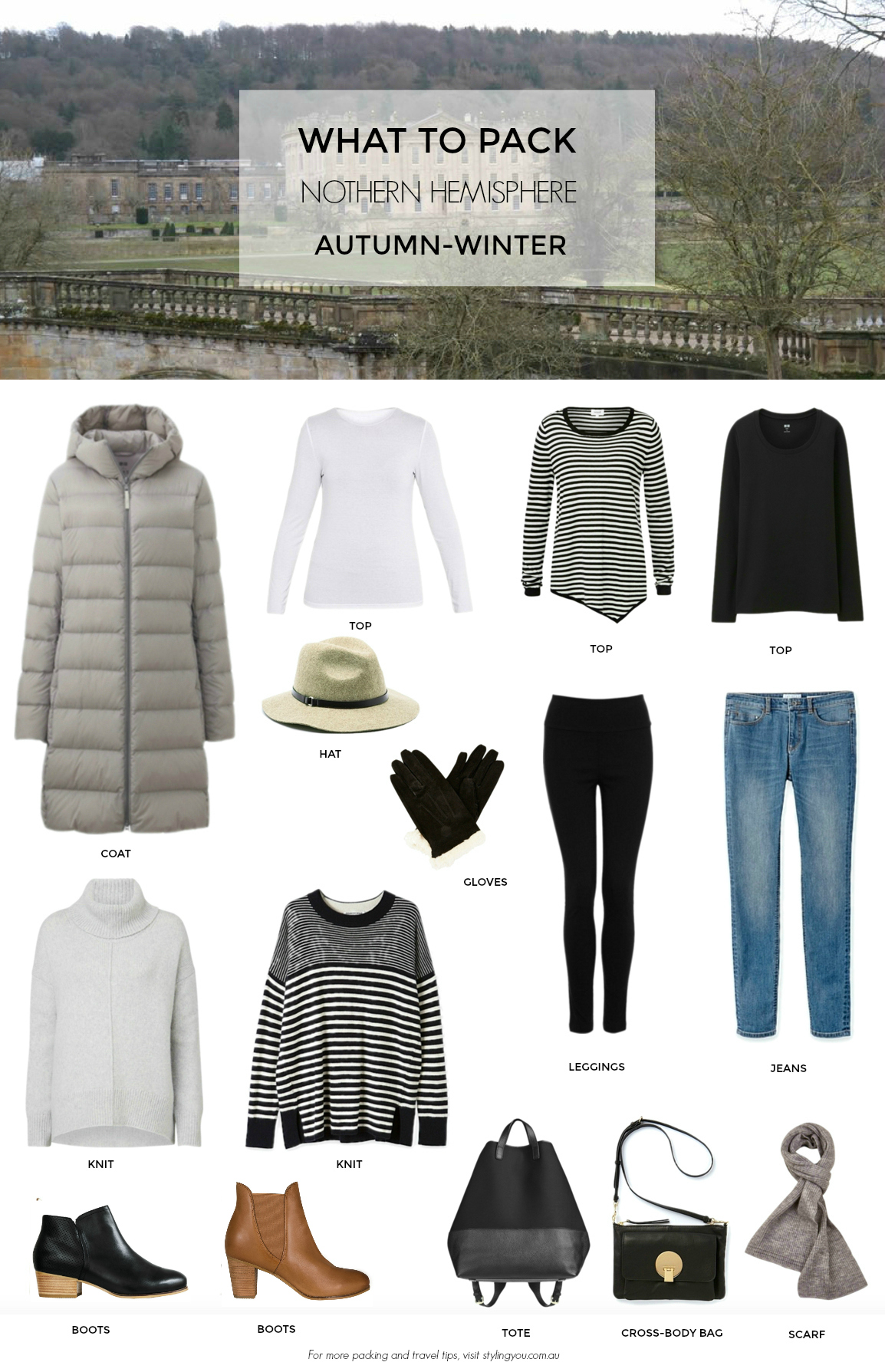
**PLEASE NOTE THESE IMAGES AND LINKS WILL BE UPDATED AT TIME OF PUBLISHING**
(Guide only: please note items may no longer be available)